Graffiti removal beside Melbourne roads needs planning for traffic, pedestrians and surfaces. Key points from Australian Commercial Maintenance.
Graffiti removal beside a Melbourne road takes more planning than cleaning a wall inside a private site, because the work can affect drivers, pedestrians and cyclists as well as the surface. The controls depend on the road, the work location, the surface and the cleaning method.
What Does Traffic-Controlled Graffiti Removal Involve?
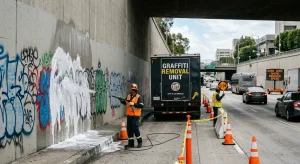
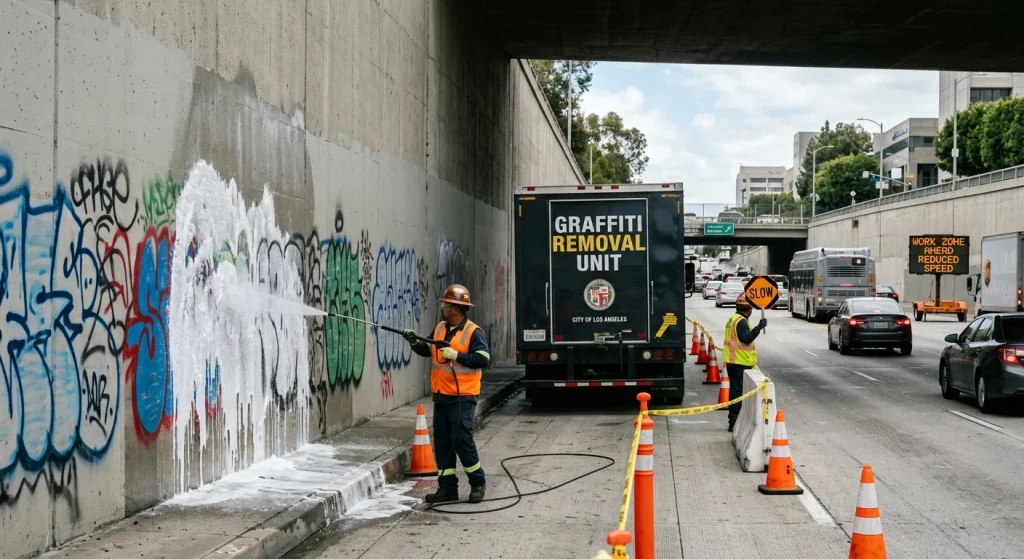
It means planning the cleaning around the vehicles, pedestrians and cyclists using the road and footpath. Formal traffic control is not needed on every roadside job, but it may be when workers, vehicles, hoses or equipment enter or affect a public road or footpath. When we assess a site, we look at:
- Traffic conditions: Posted speed, traffic volume and how close the crew will be to moving vehicles.
- Road layout: Intersections, bends, crests, driveways and limited sightlines can add risk.
- Public access: Pedestrians and cyclists need a safe route, or an approved alternative where required.
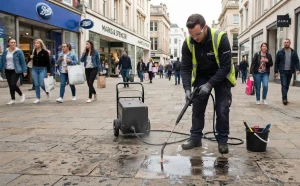
- Equipment placement: Vehicles, hoses and pressure washing equipment should not create avoidable traffic or trip hazards.
- Timing: Cleaning outside peak periods can reduce delays.
- Control measures: Barriers, signs, a protected work zone, pedestrian management or qualified traffic controllers, depending on the assessment.
Road Authority Approval for Roadside Graffiti Removal
Approval depends on whether the work enters or affects the road reserve, not on whether the property can be seen from the road. Confirm who manages the road before cleaning begins.
- Local roads: The council is generally the coordinating road authority and can confirm its permit requirements.
- Arterial roads and freeways: The Department of Transport and Planning is the coordinating road authority and works on them need its consent.
- Traffic management: For works on an arterial road, a traffic management company accredited by the Department of Transport and Planning must design the traffic management plan and manage traffic on site.
- Temporary traffic devices: Managing traffic and installing temporary traffic control devices requires a Memorandum of Authorisation, which the accredited company applies for.
- Footpaths and road reserve: Work that occupies a traffic lane, shoulder, parking lane or footpath may need consent from the relevant road authority.
- Private property: Formal Road approval may not be needed when the work stays entirely within private property and does not affect public access or traffic. Site safety obligations still apply.
Protecting Surfaces, Workers and Stormwater
Choose a graffiti removal method suited to the surface and test a small area first to prevent staining, coating loss or damage. See our notes on safe graffiti removal on bricks and concrete. Heritage-listed or fragile masonry may need low-pressure cleaning, specialist advice and separate approval, so check with the relevant council or Heritage Victoria first.
Workers also need protection from moving vehicles, pressurised equipment, chemicals and slippery surfaces. Near drains, paint residue, cleaning chemicals and contaminated wash water should be contained and kept out of the stormwater system.
Planning Roadside Graffiti Removal with Australian Commercial Maintenance
Roadside graffiti removal works best when the method, public access and surface protection are planned together. We provide graffiti cleaning for commercial properties, council assets, public facilities and high-traffic areas across Melbourne and Victoria as part of our wider cleaning and maintenance services. Tell us about the location, access and surface, and we can advise on the approach.
Request a quote for graffiti removal at your Melbourne roadside property.