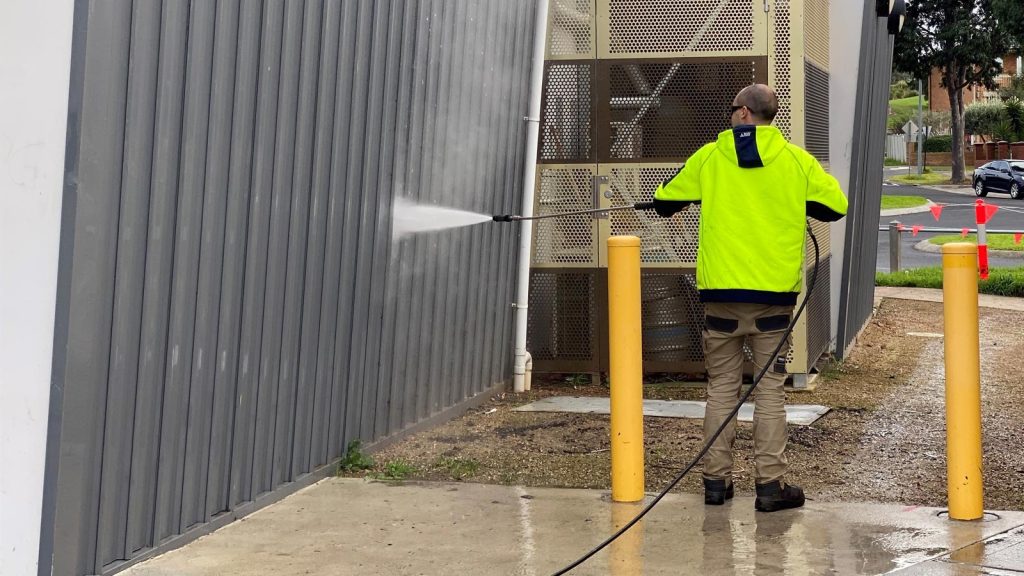
Australian Commercial Maintenance offers hot water pressure washing in Melbourne for grease, oil, grime, and cleaner commercial site presentation.
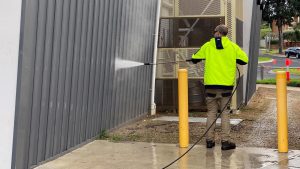
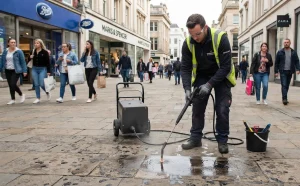
Hot water pressure washing can help remove grease and oily grime from suitable concrete, paved and hard-surface areas by combining heated water with controlled pressure. We assess the surface, contamination, drainage, and access before recommending a cleaning approach for a commercial site.
Why Use Hot Water on Greasy Commercial Surfaces?
Oil and grease can bind to dirt and settle into porous or textured surfaces. Cold-water washing may move loose material without adequately addressing the greasy film. Heated water helps loosen compatible residues so pressure washing can lift contamination more effectively from an appropriate surface.
Our hot water pressure washing equipment is designed for deeply ingrained dirt and grime and can use little to no chemicals where the condition allows. A suitable degreasing product may still be required for stubborn contamination, but chemical selection must account for the surface, site activities and wastewater controls.
Pressure, temperature and dwell time are not interchangeable settings that should be maximised blindly. Excessive pressure or unsuitable treatment can mark surfaces, disturb joints or move contaminated water into the wrong area. We determine the method after reviewing the site rather than promising complete stain removal without an inspection.
Where Grease and Oil Build-Up Creates Problems
Commercial properties need loading, parking, waste, and service areas to remain functional and presentable. Greasy residue can lower traction, collect dirt and make routine maintenance harder. Cleaning does not replace spill prevention or repairs, but it can form part of a practical maintenance program.
Areas that may require assessment include:
- Loading bays: Vehicle and equipment activity can leave oil, dirt and tracked residue on suitable concrete.
- Car parks and ramps: Oil spots, tyre marks and grime can affect presentation and surface traction.
- Workshop surrounds: Maintenance activity may create localised oily build-up requiring controlled cleaning.
- Bin and service zones: Grease, food residue and general grime can accumulate around waste-handling areas.
- Hardstand and paved areas: Traffic and outdoor exposure can produce embedded dirt and staining over time.
Property managers dealing specifically with parking areas can review our car park cleaning article covering oil, tyre marks and slip-risk reduction.
Reduce Environmental Risk with Proper Site Controls
Grease and oil must not simply be washed towards a stormwater drain. EPA Victoria’s stormwater pollution guidance identifies oil, grease and detergents as common commercial pollutants and recommends controls such as marked stormwater entry points, bunding, spill equipment, and oil-water separation where applicable.
Before work starts, the site plan should identify:
- Stormwater drains, pits and surface falls
- The type and extent of contamination
- An appropriate wastewater collection or disposal pathway
- Pedestrian, vehicle and operational access restrictions
- Nearby walls, doors, landscaping or equipment requiring protection
- Any site-specific environmental or safety procedures
A property manager may need advice from the relevant water corporation or environmental professional about trade waste and disposal requirements. Pressure washing should proceed only when the proposed controls suit the site and contamination.
Arrange Commercial Hot Water Pressure Washing
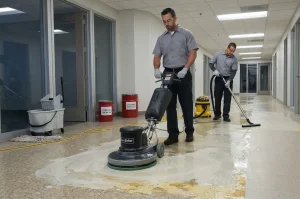
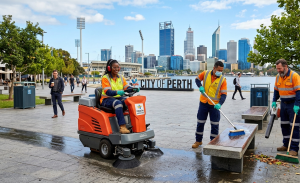
Australian Commercial Maintenance provides commercial pressure washing across Melbourne and Victoria for suitable internal and external building surfaces, flooring, concrete, paving and public spaces. Our broader commercial cleaning and facility maintenance services can also support planned site presentation and upkeep.
Contact us so we can review access, surface suitability and the required scope before preparing a quote.